Article Overview
July 2026 was one of Google's busiest months in recent memory, and almost none of it was covered by the headlines that focused on OpenAI and Anthropic's model launches. Underneath that noise, Google shipped something genuinely significant in almost every direction simultaneously.
A robot model that can reason about the physical world and collaborate with people. A cybersecurity-specialized Gemini model to match OpenAI's GPT-5.5-Cyber. The popular NotebookLM quietly rebranded to Gemini Notebook and integrated across Google Search and the Gemini app. An alliance with BlackRock, Carhartt, and Ford to rebuild America's skilled trades pipeline. Three wildfire detection satellites launched from California. A Gemini Spark update that, with your permission, uses your actual saved passwords to handle web errands on your behalf.
And then there was Pelé — a goal scored in 1959 that was never filmed, reconstructed from scratch using Google DeepMind technology 67 years later.
This article covers all 18 updates from Google's July 2026 roundup, published August 4. Each one is explained clearly with why it matters, organized so you can find what is relevant to you quickly.
At a Glance: All 18 July Updates
| Update | Category | Key Detail |
|---|---|---|
| Gemini 3.6 Flash, 3.5 Flash-Lite, 3.5 Flash Cyber | Developer | Three new models for production agents; Cyber = security-specialized |
| Gemini Robotics ER 2 | Frontier AI | Most capable embodied reasoning model yet |
| Samsung Galaxy Z Series + Gemini Intelligence | Devices | Fold8 Ultra, Fold8, Flip8 launch with first Gemini Intelligence capabilities |
| Android 17 iPhone migration | Devices | Wireless transfer from iPhone, no separate app required |
| Gemini Notebook (formerly NotebookLM) | Learning | Renamed, integrated into Gemini app and Google Search |
| AI and Economy ATLAS | Economy | Large-scale ongoing study of AI's economic impact |
| Alliance for America's Skilled Trades | Economy | Google, BlackRock, Carhartt, Ford building trades workforce pipeline |
| AlphaEvolve general availability | Developers | Gemini-powered code optimization agent on Google Cloud |
| Connected apps in AI Mode | Daily life | YouTube Music and more linked directly in Search |
| Gemini Spark web errands | Daily life | Uses your saved credentials to handle complex web tasks |
| Google Vids — Gemini Omni + personal avatars | Creativity | Generate videos and appear as your own AI avatar |
| Pelé's lost goal reconstruction | Creativity | August 2, 1959 goal never filmed — rebuilt with DeepMind technology |
| Google Images 25th anniversary | Creativity | New browseable home and AI image generation in Search |
| Lyria 3.5 in Google Flow Music | Creativity | New music model with better musicality, lyrics, and vocals |
| NOAA + Google Cloud weather forecasting | Environment | First numerical weather prediction on public cloud |
| UN natural hazards AI report | Environment | Google's role in multi-hazard early warning systems |
| FireSat wildfire satellites | Environment | Three new satellites launched from Vandenberg for early fire detection |
| Bioresilience program | Safety | Google DeepMind + Isomorphic Labs joint approach to biosecurity |
Part One: Developers and Frontier AI
Three New Gemini Models — Including a Cybersecurity Specialist
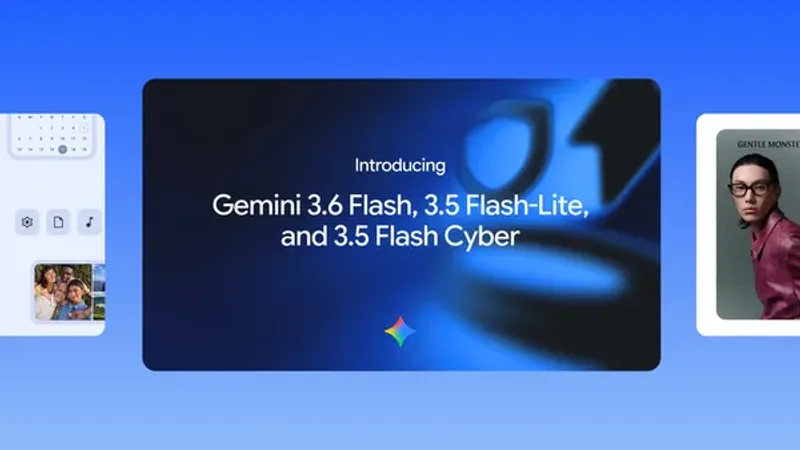
Developers building production AI agents got three new model options in July, each aimed at the combination of efficiency, low latency, and reliability that agentic workflows demand.
Gemini 3.6 Flash is the new default for Managed Agents — as covered in the separate July 28 developer update, it replaced Gemini 3.5 Flash as the standard choice and runs without requiring any code changes.
Gemini 3.5 Flash-Lite is the lowest-latency, lowest-cost option in the 3.5 family — designed for the highest-volume applications where speed takes priority.
Gemini 3.5 Flash Cyber is the most distinctive addition. The name is direct: this is a cybersecurity-specialized Gemini model, positioned in the same category as OpenAI's GPT-5.5-Cyber from the Daybreak platform. Google has not published detailed capability specifications, but its existence confirms that specialized cybersecurity AI is now a product category where Google is competing directly alongside OpenAI. For security operations centers, vulnerability research teams, and organizations building security automation, a Gemini-based cyber model available through standard API access is a significant addition to the options available.
Gemini Robotics ER 2 — Reasoning in the Physical World
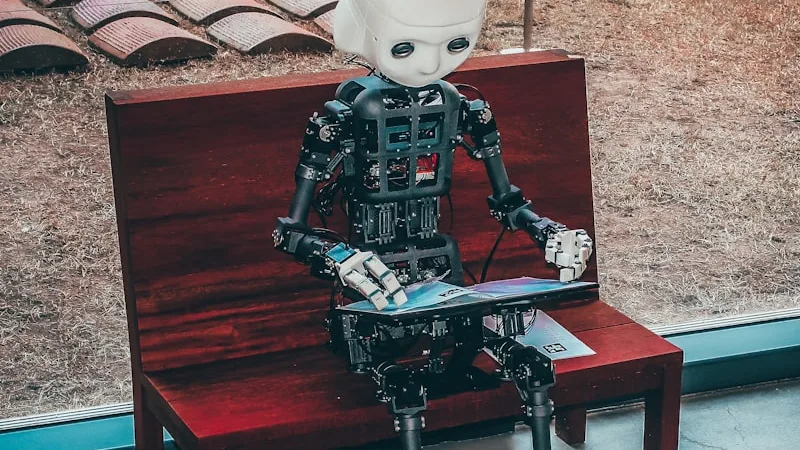
Google launched Gemini Robotics ER 2 in July — the second generation of its "embodied reasoning" model, which bridges the gap between language intelligence and physical world operation.
Embodied reasoning is the technical challenge of taking a model that reasons fluently over text and making it useful for systems that need to navigate, manipulate, and interact with the physical environment. ER 2 can hold natural conversations with people, interpret its physical surroundings, and work through complex multi-step tasks that unfold in the real world rather than on a screen.
The target audience is developers building robots and physical AI systems — not consumer products, but the infrastructure layer for the next generation of machines that work alongside humans in warehouses, hospitals, homes, and research labs. ER 2 is the most capable version of this capability Google has released publicly.
Part Two: Devices
Gemini Intelligence on Samsung Galaxy Z Fold8 and Flip8
At Galaxy Unpacked 2026, Samsung launched the Galaxy Z Fold8 Ultra, Fold8, and Flip8 — and the first capabilities of Gemini Intelligence arrived alongside them. Google describes this as an initial rollout with more to come, making these the first devices to carry Gemini Intelligence as a native capability from launch day.
For the hundreds of millions of Android users who are not on Pixel devices, this is the most direct path to Gemini capabilities built into the hardware and software they are already using.
Android 17 — Wireless iPhone Transfer, No App Needed
One of the persistent friction points in switching from iPhone to Android has been the migration process — backing up data, downloading a separate transfer application, managing the process manually. Android 17 now includes a native migration experience built directly into the operating system that transfers data wirelessly from an iPhone, covering more data types than previous approaches, without requiring a separate download.
The timing alongside Samsung's Z Series launch was deliberate — making the argument that switching to Android is simpler than it used to be at the exact moment Samsung was presenting its newest flagship hardware.
Part Three: Learning
NotebookLM Is Now Gemini Notebook
The product that became one of Google's most talked-about AI tools — NotebookLM, which lets users upload documents and ask questions about them, generate audio overviews, and conduct research within their own materials — has been renamed Gemini Notebook.
The product is the same one that built the "hugely popular" reputation. What has changed is where it lives and what it connects to. Gemini Notebook now operates across the broader Google ecosystem — accessible from within the Gemini app, from within Google Search, and as a standalone product. The secure cloud computer that was added to NotebookLM in June's upgrades is included.
The rebranding signals something important about Google's strategy: Gemini is becoming the unified identity for AI experiences across Google's products, and the most useful standalone AI tools are being pulled into that ecosystem rather than remaining as separate destinations.
Part Four: AI and the Economy
The AI and Economy ATLAS
Google released the first iteration of its AI and Economy ATLAS in July — described as "an expansive look at how people are using AI at work and in day-to-day life." The ATLAS is an ongoing, large-scale, de-identified study of how AI capabilities are being adopted across different types of work and different sectors of the economy.
The honest framing in the announcement is notable: Google acknowledges that the tools for observing AI's economic impact are "still a work-in-progress" and that AI's capabilities are advancing faster than the research frameworks for understanding its consequences can keep pace. The ATLAS is Google's attempt to build that understanding systematically over time rather than relying on snapshot surveys or anecdotal reporting.
Alliance for America's Skilled Trades
Google joined forces with three companies from entirely different industries — BlackRock (finance), Carhartt (workwear), and Ford (automotive) — to launch the Alliance for America's Skilled Trades. The alliance's purpose is practical and specific: building a stronger pipeline of electricians, plumbers, HVAC technicians, welders, and other skilled tradespeople at a moment when demand for their work is significantly outpacing the workforce available to meet it.
The relevance to AI is direct but often overlooked. AI data centers, clean energy infrastructure, and the physical construction that the technology economy requires all depend on skilled trades workers. The same infrastructure boom that AI companies are funding creates the demand for workers that this alliance is trying to supply. The cross-industry partnership — rather than a single technology company acting alone — reflects a recognition that the workforce pipeline problem is too large for any one sector to solve independently.
The activities include building evidence-based training programs, scaling those programs, and creating pathways into the trades that previously did not exist or were not widely accessible.
AlphaEvolve Is Now Generally Available
AlphaEvolve, Google's Gemini-powered code optimization agent, moved from limited access to general availability on Google Cloud for all customers on the Gemini Enterprise Agent Platform in July.
The product works as an evolutionary collaborator: a developer provides a baseline algorithm and describes their optimization goals, and AlphaEvolve searches through the space of possible algorithmic improvements, testing variations and returning the best-performing solution as human-readable, optimized code. The optimization is not about changing what the code does — it is about finding a version of the algorithm that achieves the same result more efficiently.
For organizations running computationally intensive workloads — simulations, data processing pipelines, optimization problems in logistics or finance — the ability to automatically improve core algorithms without manual engineering time represents a meaningful productivity gain.
Part Five: Daily Life
Connected Apps in AI Mode — YouTube Music and More
As covered in the July 16 separate article, AI Mode in Google Search now supports direct connections to third-party apps. YouTube Music is the named example — a user can ask AI Mode to curate a playlist and save it directly to YouTube Music without leaving Search. Instacart and Canva are part of the same rollout.
The pattern is consistent with the broader Google AI strategy: rather than asking people to visit a new application, bring the capability into the interfaces they already use every day.
Gemini Spark — Web Errands With Your Actual Credentials
This is the July update that deserves the most careful reading.
Gemini Spark expanded to more users globally in July, and added a new capability that moves it from an AI assistant into something closer to an AI agent acting on your behalf in the real world. With explicit user permission, Spark can now use your logged-in accounts and saved passwords to handle what Google calls "complex web errands."
Two examples capture what this means in practice: Spark can research apartments across listing sites and schedule viewings, and it can look up flight options across booking platforms and begin the reservation process. These are not tasks where Spark is generating a summary for you to act on. Spark is using your credentials to take actions in the services you use.
This is a significant capability expansion in terms of both utility and trust requirement. The user is genuinely delegating action in the world — not just requesting information. Google has positioned the credential access as explicitly permission-gated, but the nature of what is being permitted represents a meaningful step in what Gemini Spark can do on a user's behalf.
Part Six: Creativity
Google Vids — Gemini Omni and Personal Avatars
Two new features arrived in Google Vids in July. Gemini Omni integration lets users generate and edit video clips using everyday language — describing what they want to see and having the video created or modified in response. Personal avatars let users create a digital representation of themselves that can appear in their videos, effectively letting someone "star" in video content without being physically present or on camera.
Both capabilities target creators and professionals who need video content regularly but do not have production resources — the same audience that has driven CapCut and similar tools to massive adoption.
Pelé's Lost Goal — Reconstructed After 67 Years
On August 2, 1959, a 19-year-old Pelé scored what witnesses described as the most beautiful goal of his career: three consecutive "sombreros" — flicking the ball over a defender's head while running past them — executed consecutively over defenders and the goalkeeper, the ball never touching the ground. No camera captured it. The moment was lost.
In July 2026, Google DeepMind technology reconstructed it.
The project involved using AI to recreate the sequence from historical accounts, period footage of comparable plays, and the physical constraints of what Pelé's documented technique would have allowed. The result is a visual reconstruction of a moment from football history that no living person has ever seen in motion — a demonstration of AI as a tool for recovering and preserving human cultural memory.
Google Images Turns 25
Google Images launched 25 years ago and has been updated throughout July to mark the milestone. A new browseable home for Google Images gives the product its own dedicated interface. Image generation through AI Overviews in Search means users can now generate images directly from a Search query rather than navigating to a separate tool. Google also published a retrospective on how image search evolved from its 2001 launch to the multimodal present.
Lyria 3.5 in Google Flow Music
Lyria 3.5 is Google's newest music generation model, available through Google Flow Music. The update brings what Google describes as "significant advancements in musicality, lyrics, and vocal quality" compared to the previous Lyria model. The practical effect is richer-sounding generated tracks with more coherent lyrics and more natural vocal delivery — the areas where AI music generation has historically been weakest.
Part Seven: Environment, Safety, and Science
NOAA Brings Weather Prediction to the Public Cloud
The National Oceanic and Atmospheric Administration is modernizing its operational supercomputing infrastructure using Google Cloud's H4D virtual machines to run its atmospheric models. NOAA describes itself as one of the first organizations to bring numerical weather prediction — the computational models that produce the forecasts meteorologists use — directly to the public cloud.
The significance is practical: cloud infrastructure gives NOAA the scale to run larger simulations faster, the speed to deliver earlier warnings, and the AI capabilities that Google Cloud makes available alongside the computing infrastructure. For the meteorologists whose work protects communities from severe weather, earlier and more accurate warnings are the direct outcome.
Three FireSat Satellites Launched for Wildfire Detection
Three new FireSat satellites launched from Vandenberg Space Force Base in California in July, joining a constellation being built by the Earth Fire Alliance with Google Research specifically to detect wildfires before they become uncontrollable. The constellation uses satellite imagery to identify fire signatures at early stages — before the fires grow large enough to outpace suppression resources.
As climate change extends the fire season and expands the geographic range of wildfire risk, early detection becomes progressively more valuable. Satellites that can identify a fire in its first minutes rather than hours after it has been reported by ground observers represent a different order of magnitude of response time.
Bioresilience Program with Isomorphic Labs
Google DeepMind and Isomorphic Labs announced a joint bioresilience program with a dual mission. The first objective is preventing threat actors from misusing AI models for harmful biological applications — a concern that Anthropic, OpenAI, and now Google have all addressed through different frameworks during 2026. The second is ensuring that governments, scientists, and biosecurity experts can harness these same technologies to build a world more resilient against biological threats.
The collaboration with Isomorphic Labs — a Google DeepMind spinout focused on drug discovery using AI — reflects the same tension that makes dual-use AI safety necessary: the capabilities that could be misused for harm are the same capabilities that could be directed toward medicine, diagnostics, and defense against natural or engineered pathogens.
What July Tells Us About Google's Direction
The breadth of July's announcements reflects a pattern that has been visible across the previous months but comes into sharper focus here.
Google is moving on every dimension simultaneously — models, devices, developer tools, consumer products, environment, safety, and culture — rather than cycling through categories sequentially. This creates a kind of ambient momentum where AI is arriving in more places at once than any single announcement would suggest.
The most distinctive July decisions are the ones that step outside pure technology: the skilled trades alliance with Ford, BlackRock, and Carhartt addresses a workforce problem that AI creates demand for. The Pelé reconstruction uses AI in service of cultural memory. The NOAA partnership uses AI in service of public meteorological infrastructure. The bioresilience program uses AI in service of global health security.
These are not product launches. They are applications of AI capability to problems that matter independently of the technology itself — which is increasingly how Google is framing what AI is for.
Final Takeaway
July 2026 gave Google 18 updates spanning robotics, cybersecurity models, music, wildfire satellites, a 67-year-old football moment, and an alliance built around welders and electricians. No single announcement dominated the conversation the way OpenAI's GPT-5.6 Sol or Anthropic's Claude Fable 5 did in their respective weeks.
That diffusion is part of the strategy. Google does not need a single dramatic announcement because its AI is already embedded in the products and infrastructure that hundreds of millions of people use every day. Each update improves something that is already in use rather than introducing something new to try.
The update that will matter most to the most people is probably the Gemini Spark web errands capability — AI that takes action on your behalf with your actual credentials represents a qualitative change in what an AI assistant can do. The update with the highest long-term significance is probably Gemini Robotics ER 2 — the physical world is the last major frontier for AI capability, and Google is further along in bridging the gap between digital and embodied intelligence than the headlines suggest.